
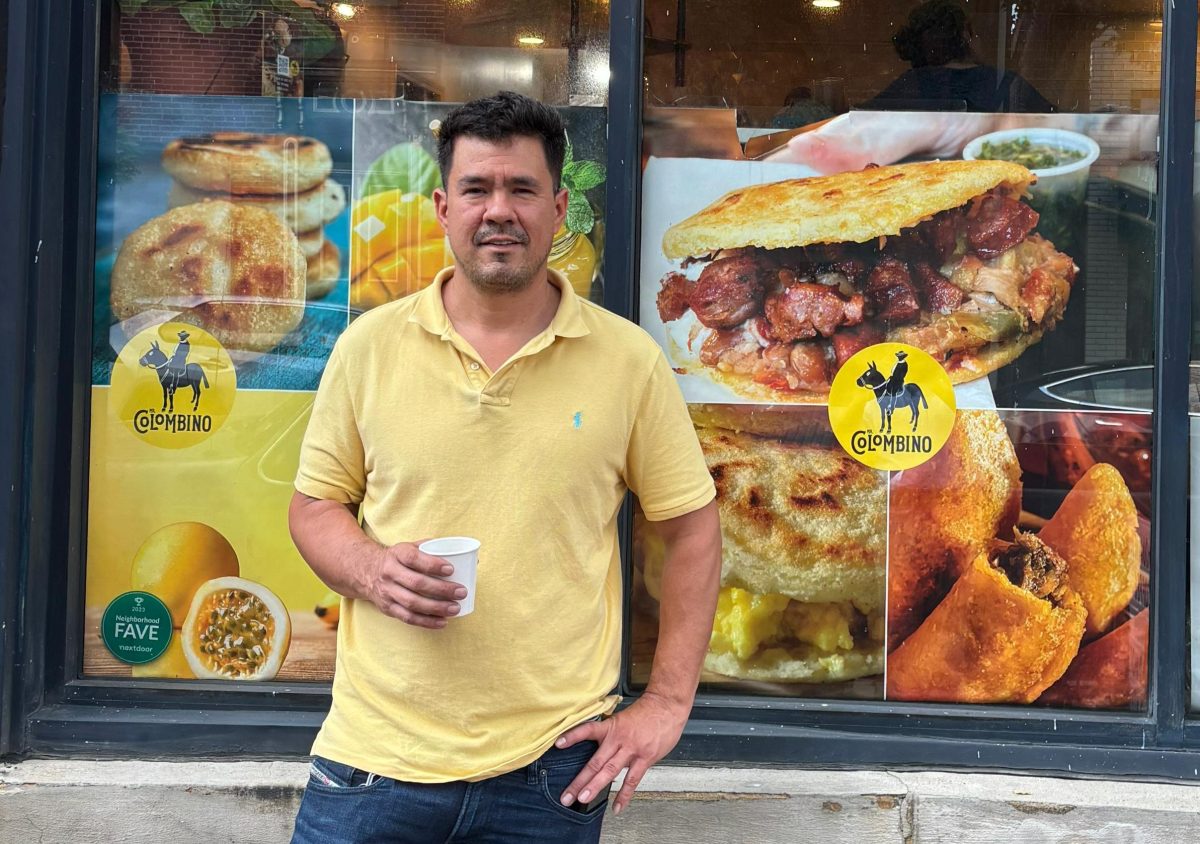
Before he had multiple Colombino locations and was importing approximately 20,000 pounds of coffee a year, Sebastián Lloreda was driving for Uber around Pittsburgh from 5:00 a.m., with freshly brewed coffee to share with his passengers. It was 2017, and the Colombian businessman from Cali, who has a degree in business administration, was beginning to make his way in a city he came to after spending several months in Morgantown, West Virginia.
Coffee, which he already knew well from his professional experience in Colombia, eventually became the center of his business life in the United States. Lloreda had worked alongside his father in Colombia on projects involving coffee, cacao, sugar cane, and tropical fruits, an experience that gave him firsthand knowledge of the agricultural sector. After settling in Pittsburgh, he worked in customer service at SAP and drove for Uber in the mornings.

Coilombino Coffee North Side Foto/Photo: Presente Pittsburgh Media
It was during those Uber rides that coffee began opening new doors for him. Lloreda would brew a pot before heading out and offer a cup to passengers who got into his car.
“I started meeting a lot of people that way, and people started getting to know me because of the coffee,” he recalls.
He eventually made his way to farmers markets and then opened a kiosk in the Strip District, his first experience operating a coffee shop. Although he closed the kiosk due to the challenges of operating outdoors, Lloreda continued with a food truck and later expanded the business to North Side and Bethel Park, while preparing to open a new location Downtown.

Colombino Coffee North Side. Foto/Photo: Presente Pittsburgh Media
Colombia Behind Every Cup
Although his business Colombino Coffee has grown in Pittsburgh, an essential part of the operation remains in Colombia, where he maintains direct relationships with producers in Cauca, Huila, Tolima, Valle del Cauca, Santander, and the Coffee Region.
He consults with them about coffee bean availability, reviews quality results, and negotiates purchases. The coffee selected for export is processed at a coffee mill in Salgar, Antioquia, before traveling through Cartagena to New Jersey and eventually making its way to Pittsburgh, where it is roasted. This business relationship has also become a way for Lloreda to maintain a close connection to the country he left behind.

Colombino Coffee North Side. Foto/Photo: Presnete Pittsburgh Media
“My main connection to Colombia is basically the producers we work with to purchase coffee and cacao,” he says.
Today, he imports approximately 20,000 pounds of coffee a year, supplying his own locations as well as wholesale customers. The business also offers traditional products such as arepas, empanadas, pandebonos, and panela. As the operation has grown, Lloreda has focused much of his work on coffee and gradually delegated other areas of the business.
“It’s a process that continues to take shape and improve every day,” he says of managing a company that he still considers a work in progress.
After years in Pittsburgh, Lloreda says he has found an appealing balance in the city, which he describes as a “small big city”—a place with access to opportunities, culture, and diversity, but without the chaos of major metropolitan areas such as New York or Los Angeles. He also highlights the warm welcome he has received from his neighbors and the opportunities to continue strengthening Pittsburgh’s Latino community.
This article was featured in the september/october edition of Pittsburgh Latino Magazine. Click here to view and share it! Send us your thoughts at hola @pitlatinomag.com


