


Freddy Potoy Rosales
Panama’s history and cultural diversity, alongside migration through the Darién Gap, the dense jungle region the country shares with Colombia and a major route for migrants journeying toward the United States, are the central themes of an exhibition that opened to the public at the Latin American Cultural Center (LACC) in Pittsburgh on September 22 and will run through June 27, 2027.
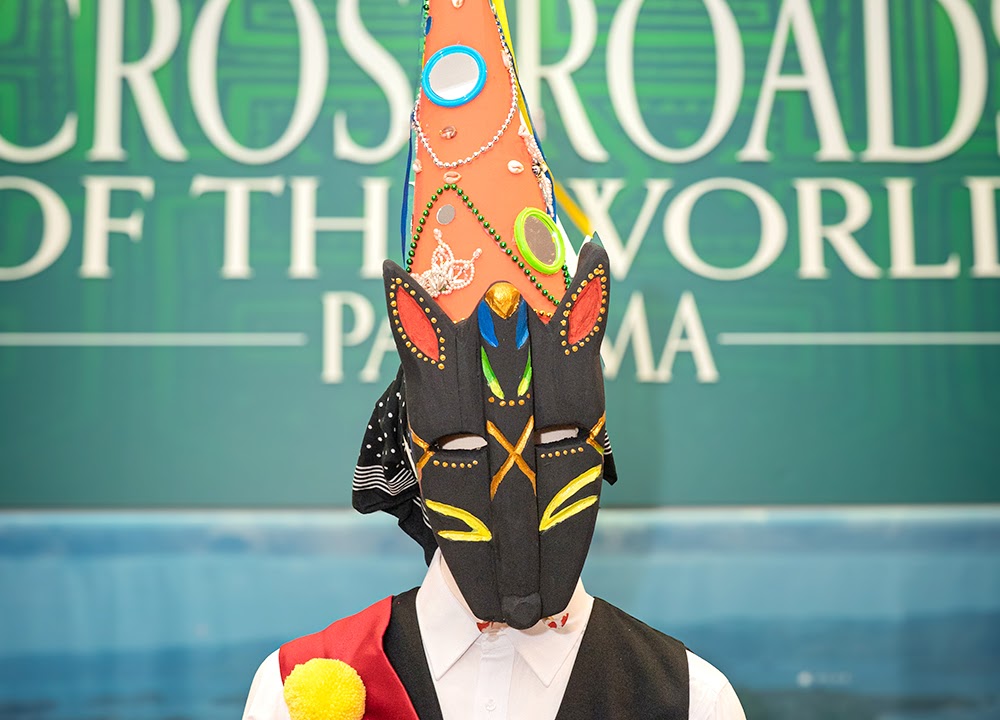
The exhibition, titled Crossroads of the World, Panama, presented in both Spanish and English, offers a comprehensive journey through the country’s rich heritage. It begins with the pre-Columbian era, moves through the Spanish colonial period, the construction of the Panama Canal, and reaches the contemporary era, highlighting the nation’s diverse cultural mosaic, shaped by Indigenous, Afro-descendant, and European influences.
Building on this geographical setting, the exhibition explores the concept of migration as an inherent part of Panama’s identity. The installation highlights the role of the country’s Indigenous communities and their ongoing struggle to preserve cultural autonomy and land rights.
The exhibition addresses Panama’s historical role as a vital connection between North and South America, as well as a transit hub between the Atlantic and Pacific oceans. The display includes historical artifacts, cultural displays, and works by contemporary Panamanian artists.
“We cannot tell only one side of the story; we cannot simply be an attraction or focus exclusively on the positive. It is important to represent all perspectives,” said the exhibition organizers, explaining the decision to incorporate the complex reality of migration through the Darién Gap alongside Panama’s rich cultural traditions.
The Darién: A Focus on Migration
One of the exhibition’s core themes is dedicated to migration through the Darién Gap. Through documentary photography, the presentation captures the harsh conditions faced by migrants navigating this dangerous wilderness.

A dedicated section titled The Road of Desperation focuses on the work of Colombian photographer Federico Ríos, who has spent years documenting the humanitarian crisis in the Darién Gap. His photographs offer a visceral glimpse into the perils confronting migrants who brave the perilous jungle path.
The exhibition also features the work of Panamanian photographer Luis Carlos García, whose imagery captures the vibrant traditions, daily life, and cultural expressions of Panama’s Indigenous and Afro-Panamanian communities.

García also collaborated with organizers to connect with local artisans, particularly Indigenous women renowned for creating traditional molas, intricate textile art pieces that reflect deep cultural narratives and ancestral knowledge.

This exhibition is part of an ongoing series of Latin American country showcases hosted by the Latin American Cultural Center in Pittsburgh’s Oakland neighborhood. In previous years, the institution has presented exhibitions dedicated to Costa Rica, Haiti, Mexico, and Guatemala. The opening celebration included a fundraising gala attended by community supporters, civic leaders, and cultural partners, featuring performances by Pittsburgh-based Colombian musicians Luis Orjuela (clarinetist) and Amín Carrillo (pianist), who performed a repertoire centered primarily on Panamanian compositions.
Visit lacc.lasaweb.org to learn more and plan your visit to the Latin American Cultural Center!

This article was featured in the November/December 2026 edition of Pittsburgh Latino Magazine. Click here to view it and share it! Send us your thoughts at hola@pitlatinomag.com

